
Women’s Mental Health: Prioritizing Yourself Without Guilt
- posted: Mar. 30, 2026
Women’s mental health is often overlooked — not because it isn’t important, but because women are so often expected to prioritize everything and everyone else first.
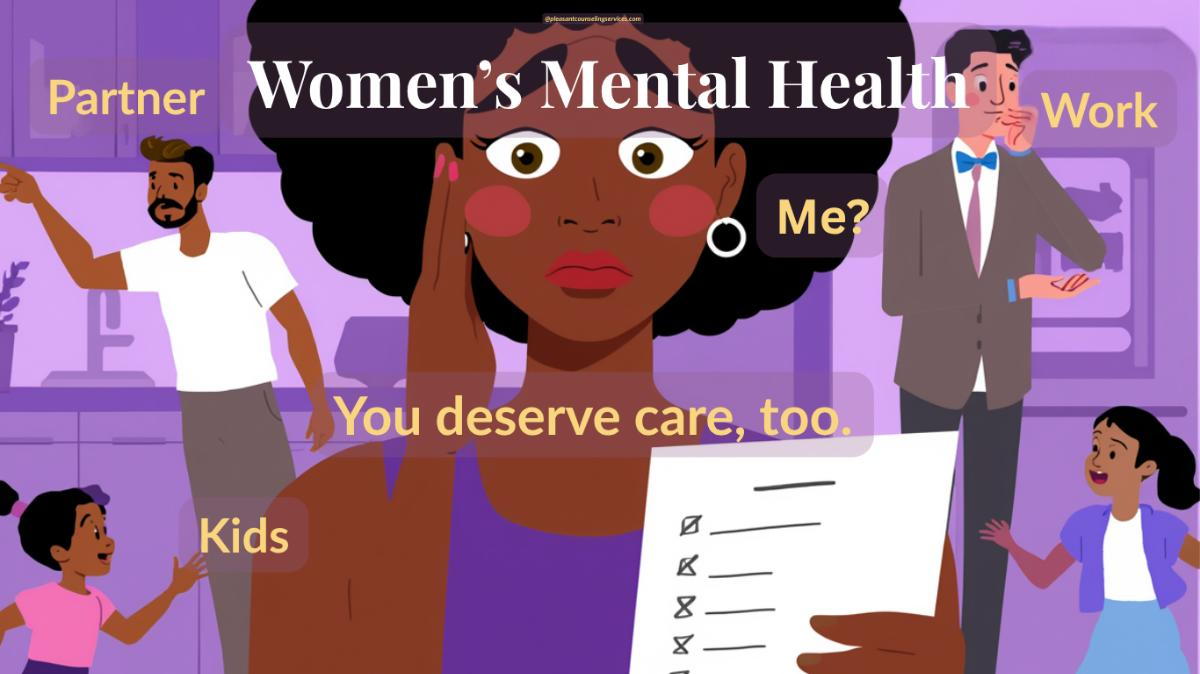
From work responsibilities to family roles to social expectations, many women carry a level of emotional and mental load that goes unseen, unspoken, and unsupported.
Over time, this can lead to burnout, anxiety, depression, and a disconnection from self.
Taking care of your mental health is not selfish.
It’s necessary.
The Invisible Mental Load
Women are often managing more than what’s visible on the surface.
Beyond daily responsibilities, there is the constant mental checklist:
What needs to get done
Who needs support
What hasn’t been handled yet
What could go wrong
This ongoing mental processing can be exhausting.
Even during moments of rest, the mind may still be active — planning, worrying, or anticipating.
This invisible load can make it difficult to truly relax, contributing to chronic stress and emotional fatigue.
Why Women Struggle to Prioritize Themselves
Many women have been conditioned — directly or indirectly — to believe that their needs should come last.
This can sound like:
“I’ll take care of myself after everything else is done.”
“I don’t want to be a burden.”
“Other people have it worse.”
Over time, this pattern leads to neglecting personal needs, which can impact both mental and physical health.
The truth is: when you constantly pour into others without refilling yourself, depletion is inevitable.
Common Mental Health Challenges Women Experience
While mental health affects everyone, women often experience certain challenges more frequently due to biological, social, and environmental factors.
These may include:
Anxiety and overthinking
Depression and emotional fatigue
Burnout from balancing multiple roles
People-pleasing and difficulty setting boundaries
Hormonal-related mood changes
Stress related to caregiving or relationship dynamics
These experiences are valid — and they deserve attention, not dismissal.
The Role of Boundaries in Mental Health
One of the most powerful ways women can protect their mental health is by setting boundaries.
Boundaries are not about pushing people away —
they are about protecting your time, energy, and emotional well-being.
This can look like:
Saying no without over-explaining
Limiting access to your time
Choosing when and how you engage with others
Prioritizing rest without guilt
Setting boundaries may feel uncomfortable at first, especially if you’re used to being available to everyone.
But discomfort does not mean you’re doing something wrong — it often means you’re doing something new.
The Impact of Guilt
Guilt is one of the biggest barriers women face when trying to take care of themselves.
You may feel guilty for:
Resting
Saying no
Taking time alone
Not meeting others’ expectations
But guilt does not always mean you’ve done something wrong.
Sometimes, guilt shows up when you are breaking patterns that no longer serve you.
Learning to tolerate that discomfort is part of the process of building a healthier relationship with yourself.
What Prioritizing Your Mental Health Can Look Like
Prioritizing your mental health doesn’t have to be drastic or overwhelming.
It can start with small, intentional shifts:
Checking in with yourself daily
Allowing yourself to rest without earning it
Creating space for activities that bring you peace
Speaking up about your needs
Seeking support when needed
These actions may seem simple, but they are powerful.
Consistency matters more than perfection.
A Therapist’s Perspective
In therapy, many women don’t initially come in saying, “I need to prioritize myself.”
Instead, they present with anxiety, burnout, relationship stress, or feeling overwhelmed.
As we explore deeper, a common theme emerges:
they have been taking care of everyone else for so long that they have lost connection with themselves.
Rebuilding that connection is not about becoming someone new —
it’s about returning to who you are without the pressure to perform for others.
Mental health care is not about doing more.
It’s about creating space to be.
🧠 Therapist Note
If you’ve been feeling overwhelmed, exhausted, or disconnected, it may not be because you’re not doing enough — it may be because you’ve been doing too much without support.
📣 Call to Action
If you’ve been putting yourself last, therapy can help you reconnect with your needs, set healthy boundaries, and build a more balanced, sustainable way of living.
You deserve support, too.
- posted: Mar. 30, 2026
Women’s mental health is often overlooked — not because it isn’t important, but because women are so often expected to prioritize everything and everyone else first.
From work responsibilities to family roles to social expectations, many women carry a level of emotional and mental load that goes unseen, unspoken, and unsupported.
Over time, this can lead to burnout, anxiety, depression, and a disconnection from self.
Taking care of your mental health is not selfish.
It’s necessary.
The Invisible Mental Load
Women are often managing more than what’s visible on the surface.
Beyond daily responsibilities, there is the constant mental checklist:
What needs to get done
Who needs support
What hasn’t been handled yet
What could go wrong
This ongoing mental processing can be exhausting.
Even during moments of rest, the mind may still be active — planning, worrying, or anticipating.
This invisible load can make it difficult to truly relax, contributing to chronic stress and emotional fatigue.
Why Women Struggle to Prioritize Themselves
Many women have been conditioned — directly or indirectly — to believe that their needs should come last.
This can sound like:
“I’ll take care of myself after everything else is done.”
“I don’t want to be a burden.”
“Other people have it worse.”
Over time, this pattern leads to neglecting personal needs, which can impact both mental and physical health.
The truth is: when you constantly pour into others without refilling yourself, depletion is inevitable.
Common Mental Health Challenges Women Experience
While mental health affects everyone, women often experience certain challenges more frequently due to biological, social, and environmental factors.
These may include:
Anxiety and overthinking
Depression and emotional fatigue
Burnout from balancing multiple roles
People-pleasing and difficulty setting boundaries
Hormonal-related mood changes
Stress related to caregiving or relationship dynamics
These experiences are valid — and they deserve attention, not dismissal.
The Role of Boundaries in Mental Health
One of the most powerful ways women can protect their mental health is by setting boundaries.
Boundaries are not about pushing people away —
they are about protecting your time, energy, and emotional well-being.
This can look like:
Saying no without over-explaining
Limiting access to your time
Choosing when and how you engage with others
Prioritizing rest without guilt
Setting boundaries may feel uncomfortable at first, especially if you’re used to being available to everyone.
But discomfort does not mean you’re doing something wrong — it often means you’re doing something new.
The Impact of Guilt
Guilt is one of the biggest barriers women face when trying to take care of themselves.
You may feel guilty for:
Resting
Saying no
Taking time alone
Not meeting others’ expectations
But guilt does not always mean you’ve done something wrong.
Sometimes, guilt shows up when you are breaking patterns that no longer serve you.
Learning to tolerate that discomfort is part of the process of building a healthier relationship with yourself.
What Prioritizing Your Mental Health Can Look Like
Prioritizing your mental health doesn’t have to be drastic or overwhelming.
It can start with small, intentional shifts:
Checking in with yourself daily
Allowing yourself to rest without earning it
Creating space for activities that bring you peace
Speaking up about your needs
Seeking support when needed
These actions may seem simple, but they are powerful.
Consistency matters more than perfection.
A Therapist’s Perspective
In therapy, many women don’t initially come in saying, “I need to prioritize myself.”
Instead, they present with anxiety, burnout, relationship stress, or feeling overwhelmed.
As we explore deeper, a common theme emerges:
they have been taking care of everyone else for so long that they have lost connection with themselves.
Rebuilding that connection is not about becoming someone new —
it’s about returning to who you are without the pressure to perform for others.
Mental health care is not about doing more.
It’s about creating space to be.
🧠 Therapist Note
If you’ve been feeling overwhelmed, exhausted, or disconnected, it may not be because you’re not doing enough — it may be because you’ve been doing too much without support.
📣 Call to Action
If you’ve been putting yourself last, therapy can help you reconnect with your needs, set healthy boundaries, and build a more balanced, sustainable way of living.
You deserve support, too.
Royse City, TX 75189
My Availability
Monday
9:00 am - 8:00 pm
Tuesday
Closed
Wednesday
9:00 am - 8:00 pm
Thursday
9:00 am - 8:00 pm
Friday
9:00 am - 8:00 pm
Saturday
9:00 am - 8:00 pm
Sunday
9:00 am - 8:00 pm